Meet the object
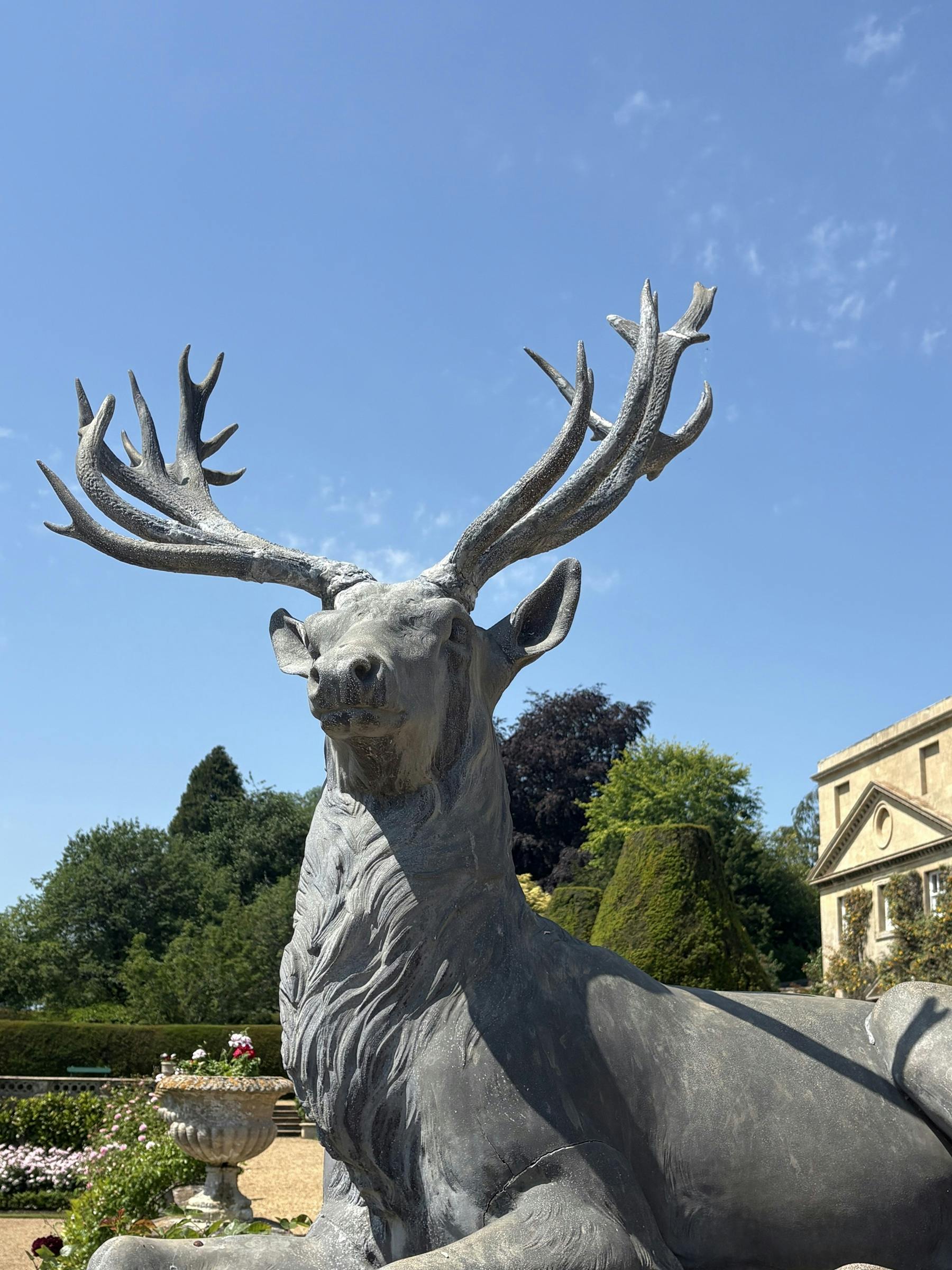
This pair of recumbent Stags have watched over the Terrace and parkland at Bowood since the middle of the nineteenth century. Made of a zinc alloy called spelter, the Stags were purchased by the 3rd Marquess of Lansdowne (1780-1863) in 1852 through Mr P. E. Lauerbach, the London agent for the German sculptor Moritz Geiss (1805-1875).
Geiss had exhibited his statues cast in zinc at the monumental Great Exhibition in 1851, profiling his exciting use of this metal to make art more affordable. The entire exhibition was designed around showing advances in technology and industry at the very peak of the Industrial Revolution, an enterprise spearheaded by Prince Albert (1819-1861).
The Great Exhibition of 1851
Prince Albert was incredibly inspired by art and industry. He looked towards France, who had been holding expositions profiling national industry since the late eighteenth century, and felt that Britain needed to be doing the same. A Royal Commission was established in January 1850 to put together the ‘Great Exhibition of the Works of Industry of All Nations’.
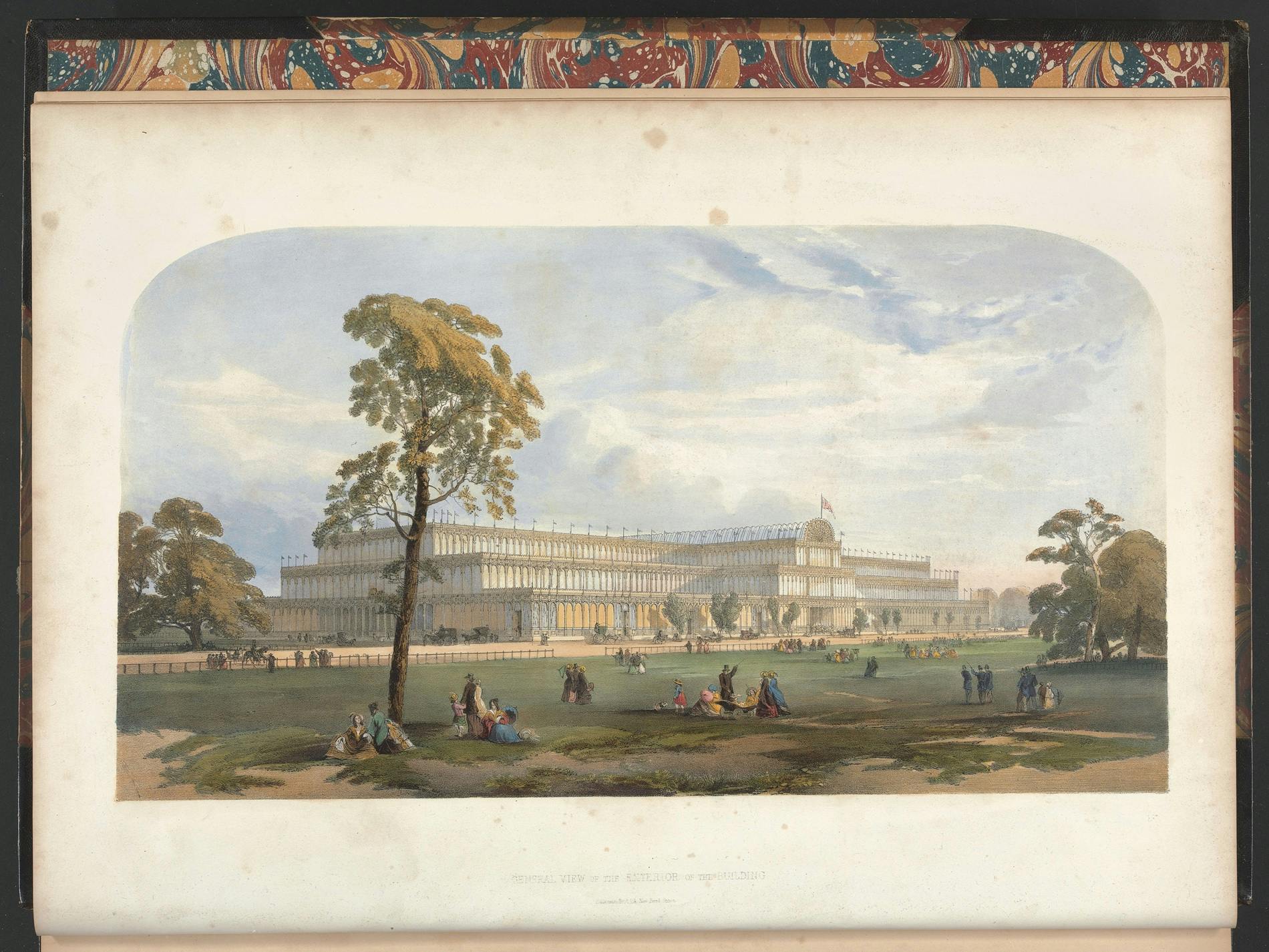
Creating a building big enough to house everything that could be displayed presented a large challenge, and it resulted in the building of Joseph Paxton’s design for the Crystal Palace in Hyde Park. The Crystal Palace housed an area of around eighteen acres, which was filled with more than 14,000 exhibitors representing 34 nations.
The exhibition was opened on the 1st of May 1851 by Queen Victoria and ran until the middle of October. It created a frenzy: six million people visited the exhibition, helped by the railway and relatively affordable cost of entry. Visitors could wander displays featuring raw materials, machinery, manufacturing and fine art objects, which meant there was quite a breadth of pieces being exhibited: from sculpture to taxidermy, photography to jewels.
Image: Dickinsons' comprehensive pictures of the Great Exhibition of 1851 /, London : Dickinson, Brothers, Her Majesty's Publishers, 1854, Yale Center for British Art, Paul Mellon Collection.
Geiss of Berlin
As part of the inclusion of several foreign states in the Exhibition, M. Geiss of Berlin exhibited from the state of Prussia. Geiss ran a Berlin foundry that specialised in casting sculptures in zinc. At the Great Exhibition, he showed numerous copies of recognisable statues, such as Hebe after Canova and an ancient Kneeling Niobe. Queen Victoria and Prince Albert purchased some of Geiss’s work for the gardens at Osborne House on the Isle of Wight.
In the Catalogue to the Great Exhibition, the virtues of Geiss’s work in the development of zinc casting were extolled. He had removed doubts of its durability when statues were kept outside, and, most importantly, had worked to combat issues over the ‘unfavourable colour’ of zinc as a material:
‘This difficulty, however, through the indefatigable exertions of the present exhibitor, the founder of this important branch of art in Berlin, has been completely overcome. He has succeeded in imparting to the zinc a metallic surface, which gives the cast the perfect aspect of Florentine bronze.’
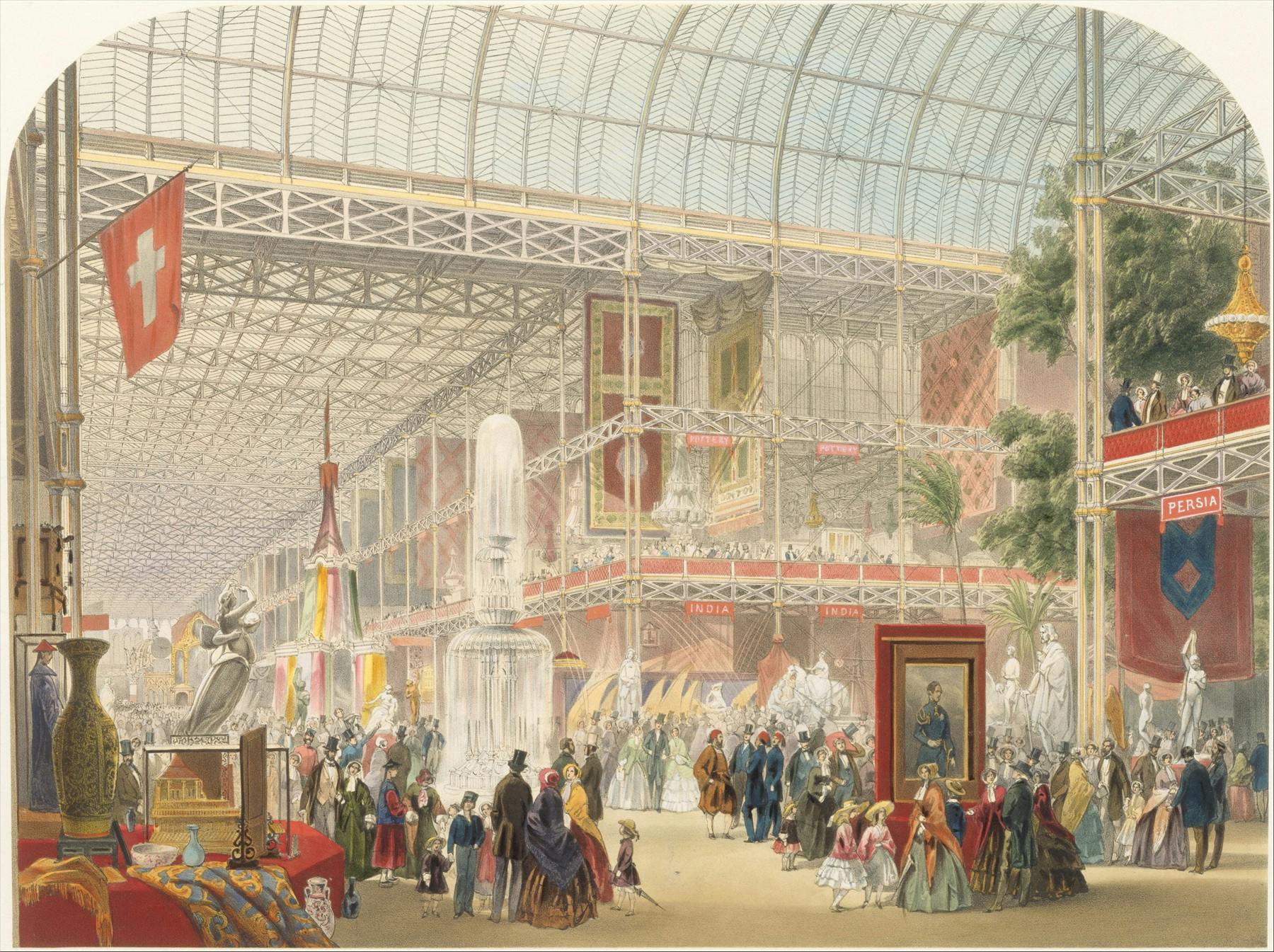
Image: Recollections of the Great Exhibition, plate 3: General view of the interior. Metropolitan Museum of Art.
The Stags at Bowood
Geiss included in his display a pair of Stag statues, which were modelled on a pair by Christian Daniel Rauch (1777-1857) for the Grand Duke Georg von Mecklenburg-Strelitz’s park at Schloss Neustrelitz in northeast Germany. Prince Albert bought a pair of the sculptures after seeing them in the Great Exhibition, and we think that Henry, 3rd Marquess of Lansdowne, probably viewed them at the Exhibition too.
Interestingly, we know from the receipt that Lord Lansdowne paid £14 – the equivalent of about £1,500 in today’s money – more for his pair of Stags than Prince Albert did!
Today, they remind us of Victorian innovation with materials, as well as Prince Albert and Lord Lansdowne’s shared interest in art and progress.