Meet the object
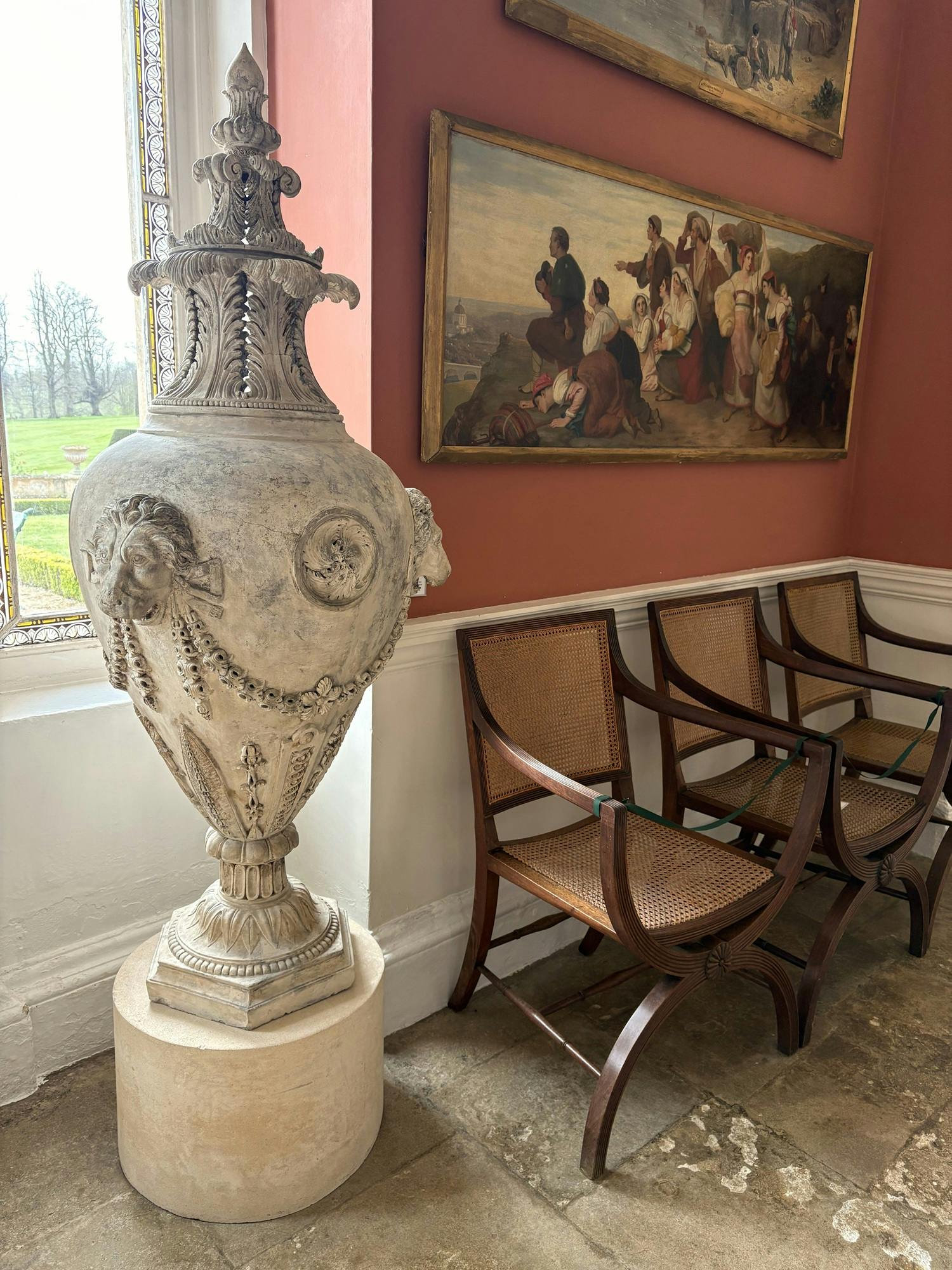
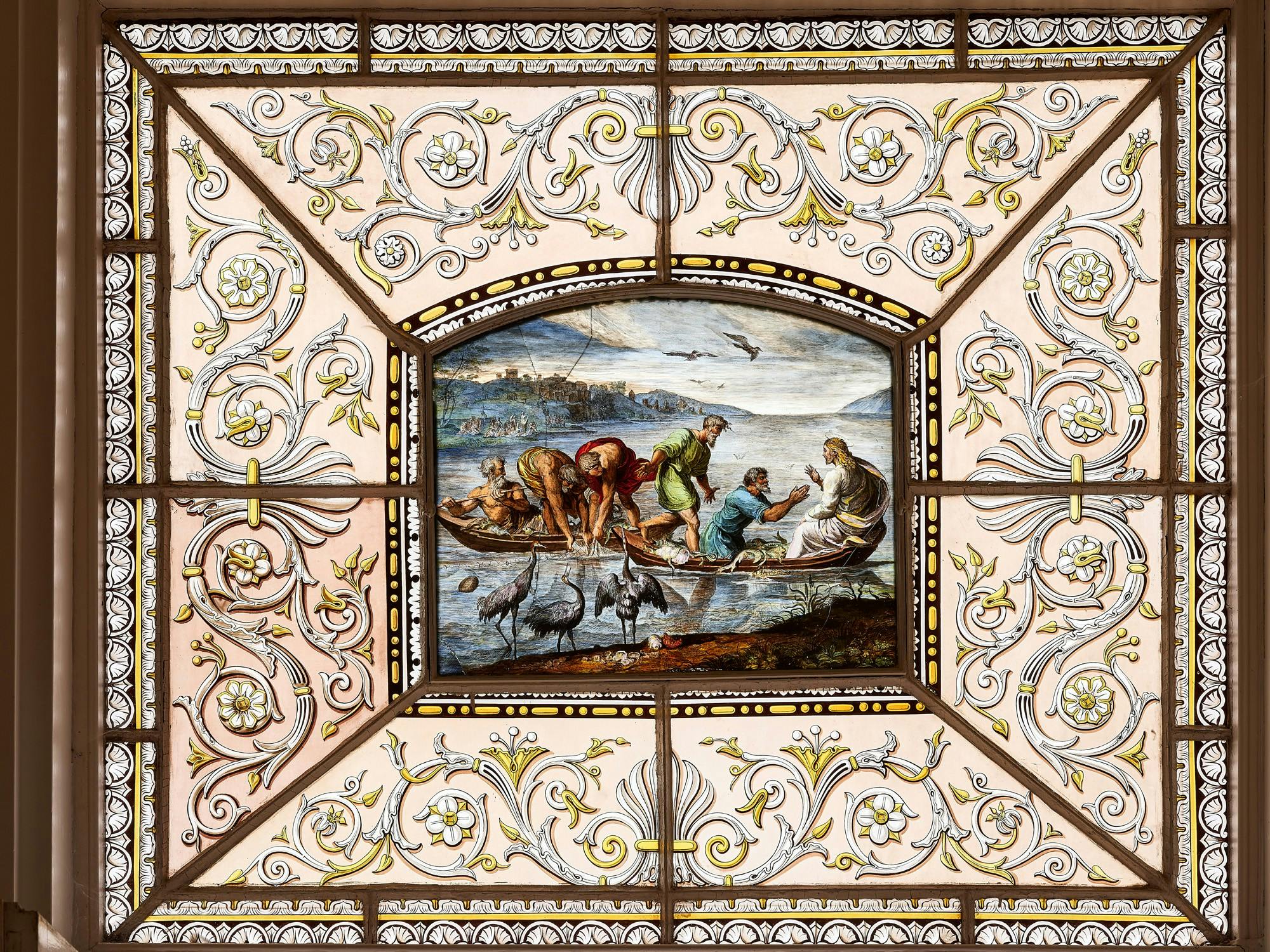
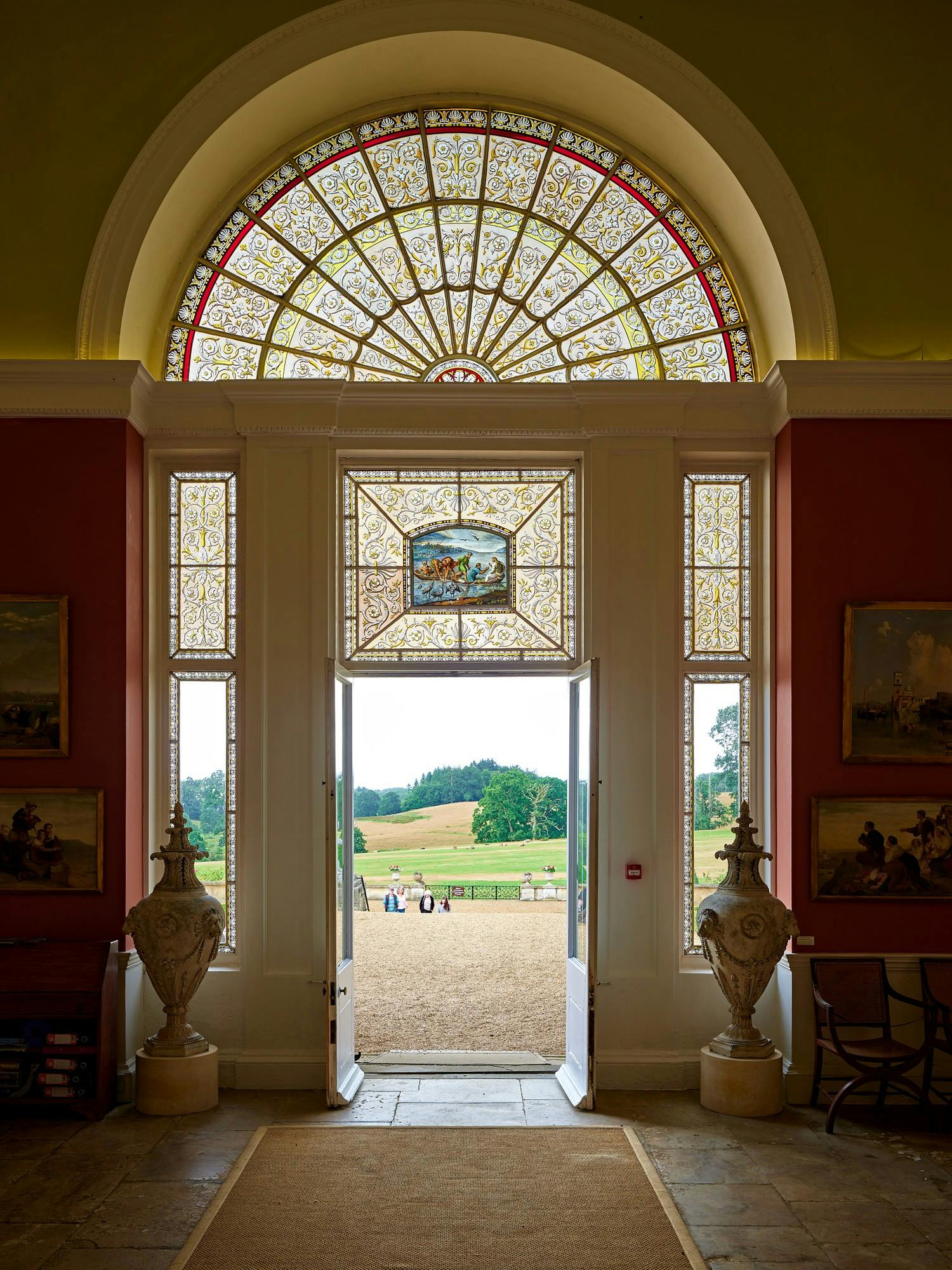
The entrance to the Orangery at Bowood House is resplendent with stained glass. The stained-glass panels are arranged within an arch designed by Robert Adam. Sitting directly above the door is a particularly spectacular piece.
Painted on glass by Eglington Margaret Pearson (1746-1823), it is a late eighteenth century copy of Renaissance titan Raphael’s (1483-1520) Miraculous Draught of the Fishes, originally painted c. 1515-1516. Vivid colours show a miracle from the book of Luke in the Bible in which St. Peter, one of the founding fathers of the Catholic Church, is called to help spread the Christian faith.
Jesus is seated in the boat, where his apostles Peter and Andrew have been unsuccessfully fishing in the Lake of Gennesaret (Sea of Galilee). He urges Peter to put nets into the deep water, where they manage to catch an abundance of fish. Another boat comes to help them. Peter falls to his knees before Jesus, declaring himself unworthy of the miracle; Jesus blesses him and responds that Peter will now go forth and be a fisher of men.
The story of the Raphael cartoons
Pearson’s design copies the work of Raphael originally commissioned by Pope Leo X (1475-1521) in 1513.
The late fifteenth and early sixteenth century was an incredibly important time of papal art commissions for the Vatican, with Pope Leo’s predecessor Julius II engaging Michelangelo to paint the ceiling of the relatively recently rebuilt Sistine Chapel (1508-12), amongst other contributions from artists such as Botticelli and Perugino.
This commission was for ten cartoons to show episodes from the lives of St. Peter and St. Paul, which would then be woven into tapestries in Brussels to hang on the lower walls of the Sistine Chapel. These drawings were called cartoons, a word that comes from the Italian ‘cartone’, which means ‘large paper’: and they are incredibly large, with the Miraculous Draught of the Fishes measuring over three metres tall and almost four metres wide. The tapestry corresponding to this cartoon was hung in the Vatican on the 26th of December 1519.
Both Raphael and Pope Leo X died shortly afterwards, and though copies of the tapestries came out of Brussels workshops, the cartoons effectively disappeared until the beginning of the seventeenth century. They caught the eye of the future King Charles I, who bought them on a trip to the continent in 1623. After the King was executed in 1649, Oliver Cromwell sold his extensive art collection, but the Raphael cartoons were kept and later returned to King Charles II when the monarchy was restored.
Though the cartoons remain in the Royal Collection, they have been on long term loan to the Victoria and Albert Museum in London ever since Queen Victoria presented them in tribute to her husband Prince Albert in 1865.
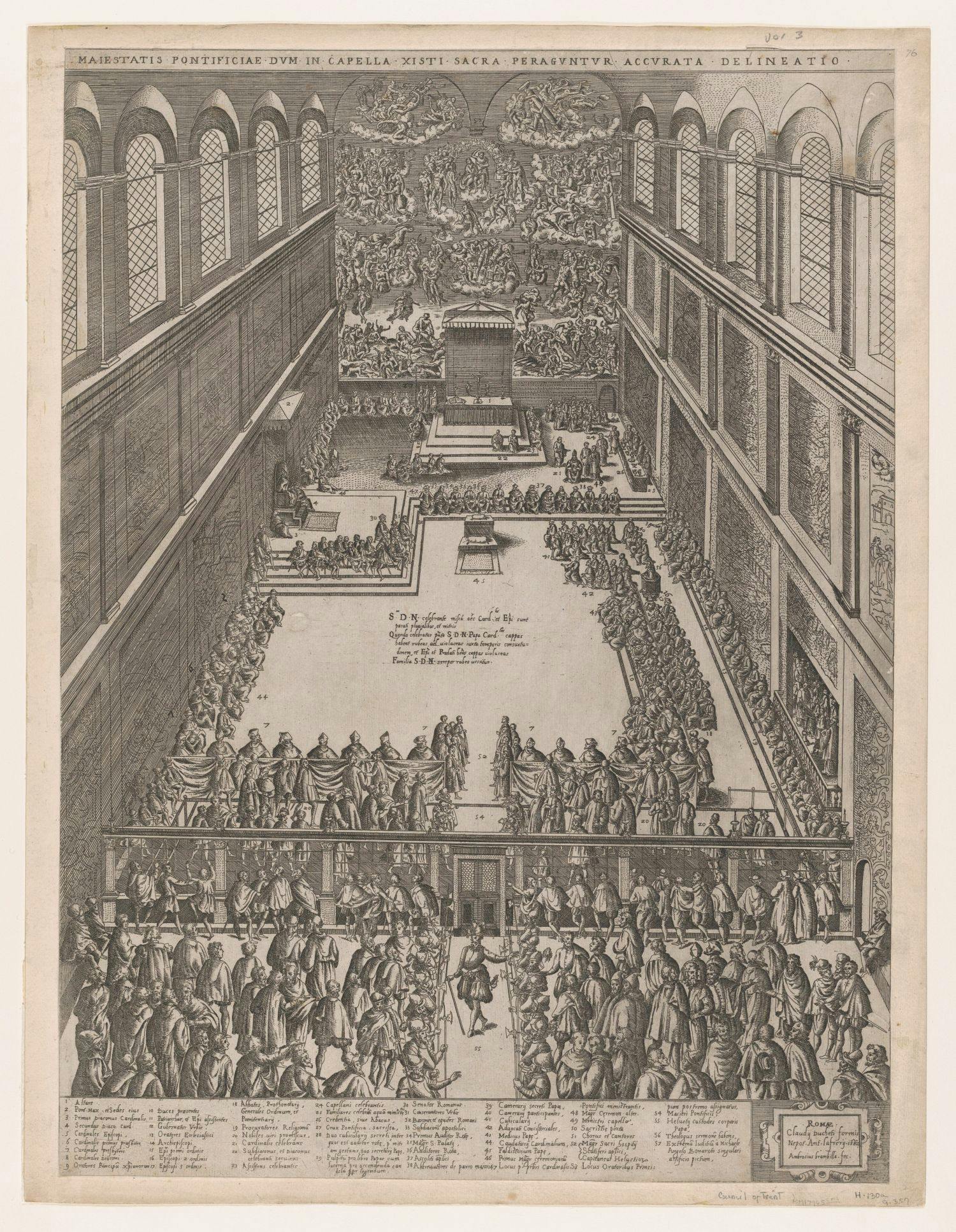
Image: Giovanni Ambrogio Brambilla, A Papal Gathering in the Sistine Chapel from “Speculum Romnae Magnificentiae”, 1582. Courtesy of the Metropolitan Museum of Art.
Eglington Margaret Pearson and glass art
Born Eglington Margaret Paterson in 1746, Pearson was the daughter of a bookdealer named Samuel Paterson. After marrying James Pearson, another glass painter, in 1768, she and her husband completed and exhibited works together as well as working independently.
They exhibited at the Society of Artists of Great Britain and both she and her husband used a popular contemporary technique whereby they painted enamels onto sheets of coloured glass which were then fired. Painted glass was quite popular at the time, with famous artists such as Sir Joshua Reynolds painting images specifically for glass artists to execute in their medium.
As her career went from strength to strength and she received commissions from prestigious clients, Pearson became recognised for her ability to recreate famous works of art, from Raphael to Guido Reni. After she died in 1823, an obituary sang her praises, remarking that ‘Mrs. Pearson has been long celebrated for her exquisite works in stained glass.’
The window at Bowood
The Bowood window came from a set Pearson completed of the Raphael cartoons. Pearson painted three sets across her career, a feat that was specifically mentioned in her obituary. One of these sets was bought by John, Lord Wycombe (1765-1809), in the late eighteenth century before he succeeded to the title of the 2nd Marquess of Lansdowne. Lord Wycombe did not live at Bowood, choosing to make a home for himself at Southampton Castle.
When he died in 1809, his half-brother Henry, 3rd Marquess of Lansdowne (1780-1863), inherited the set of stained glass. He perhaps relocated the glass to Bowood in 1816, when he sold Southampton Castle for salvage.
Now, the window sits perfectly above the entrance door, where the colours are often illuminated by light streaming in.