Meet the object
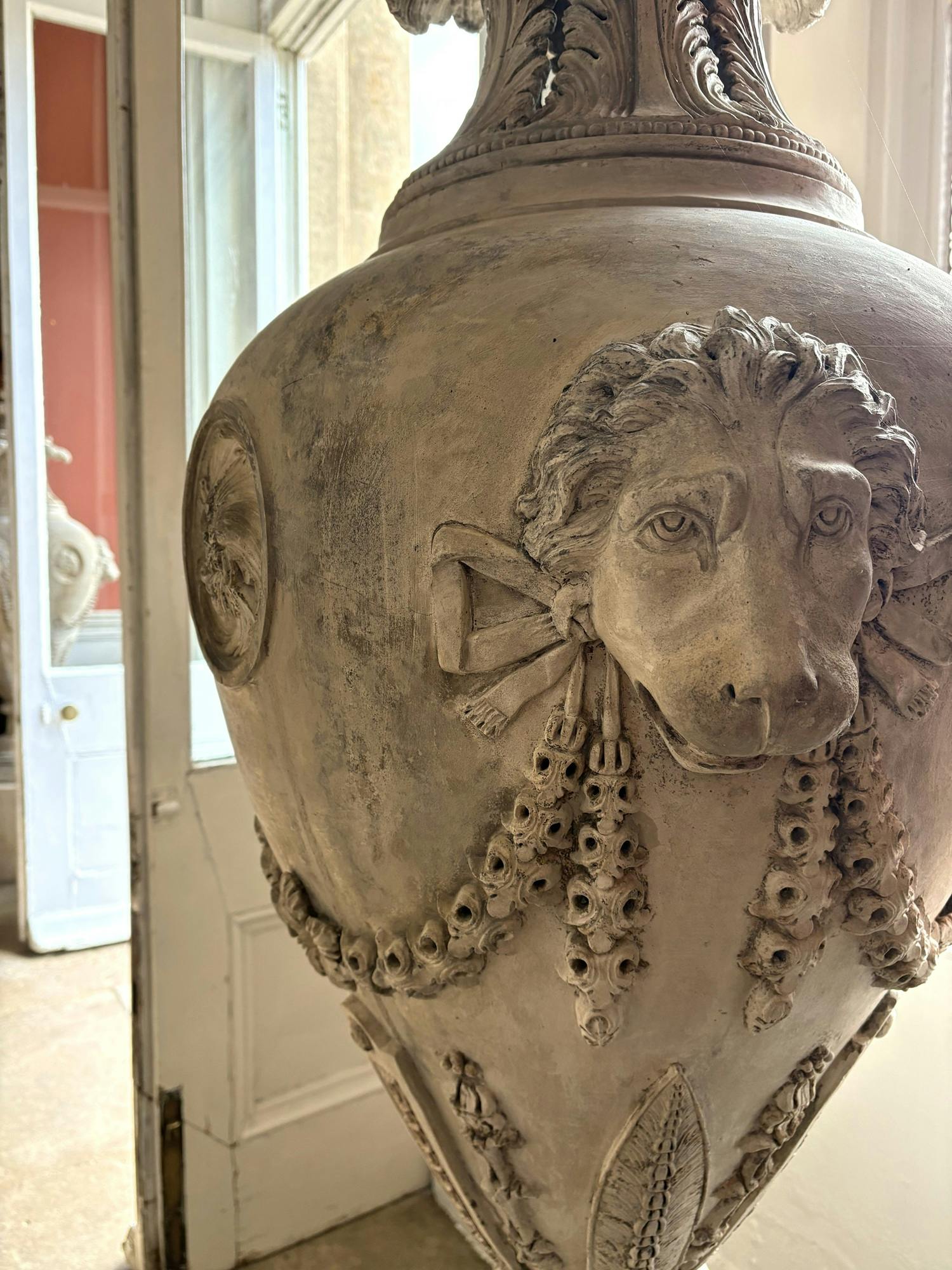
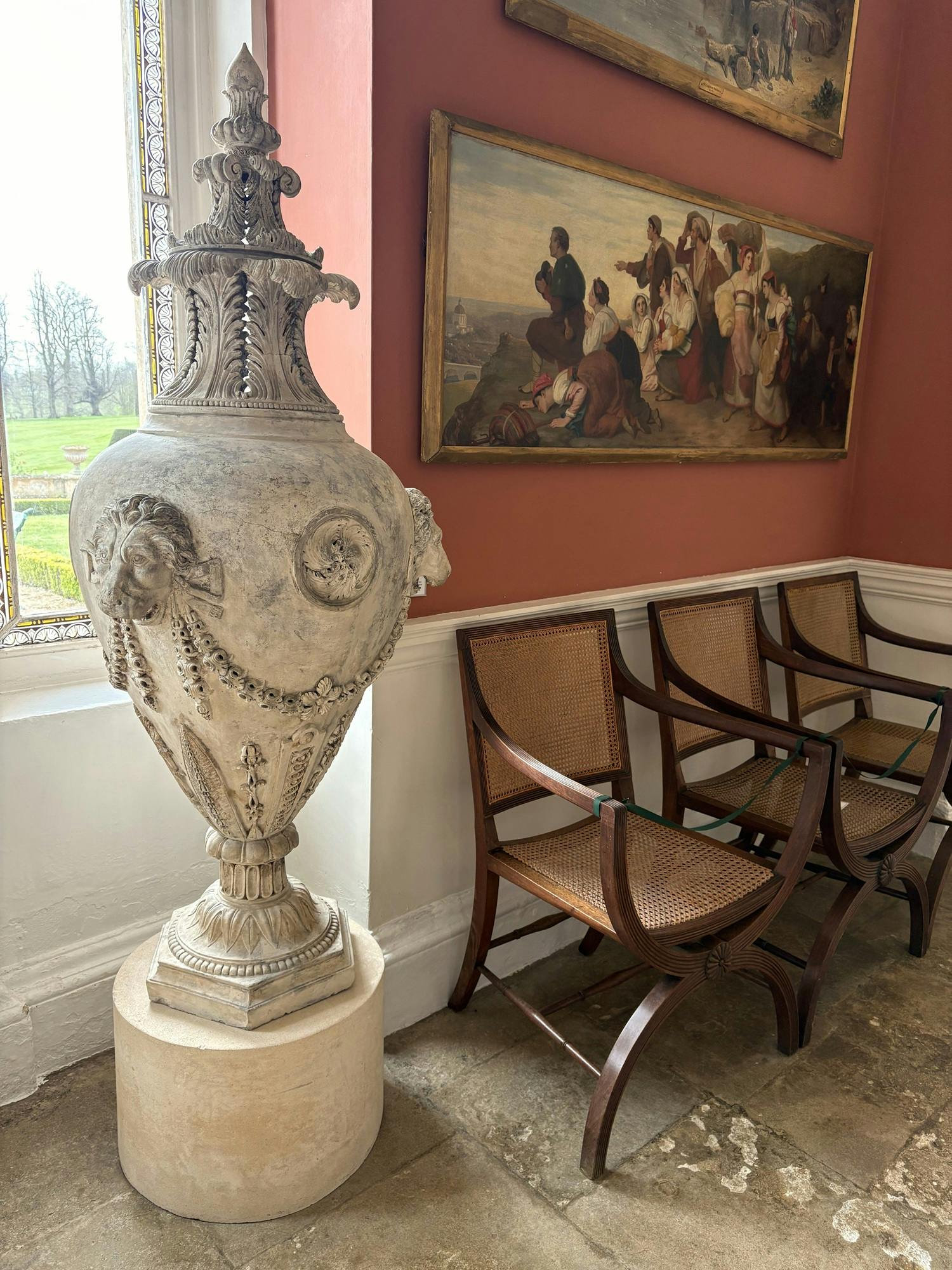
These urns, made of Coade Stone, stand either side of the doors in the Orangery. If you look closely, you’ll find acanthus leaves, lions, bows, botanical details and scrolls. Coade stone is an artificial stone that is incredibly weather-resistant and hard wearing and was very popular for architectural details and decoration – like these urns – during the second half of the eighteenth century into the nineteenth. The stone gets its name from Eleanor Coade, a highly successful businesswoman.
Eleanor Coade (1733-1821)
Eleanor Coade was born in the southwest of England and moved to London in the 1760s, where she set herself up in business to sell linens. She pivoted her business interests in 1769 when, along with her mother, she went into business with a gentleman called Daniel Picot, and bought the premises of a struggling factory making artificial stone in Lambeth. Within two years she became the sole owner, experimenting with her own artificial stone formula with the highly skilled workers at the factory.
Coade remained unmarried and built a successful career through her Lambeth factory, advertising widely, producing a catalogue and even opening an exhibition gallery. She also chose to channel her money into supporting women in difficult circumstances, including leaving stipulations in her will that in leaving money to various women, their husbands would not be able to access it. Upon her death in 1821, her manager bought and operated the factory until it closed in the 1840s.
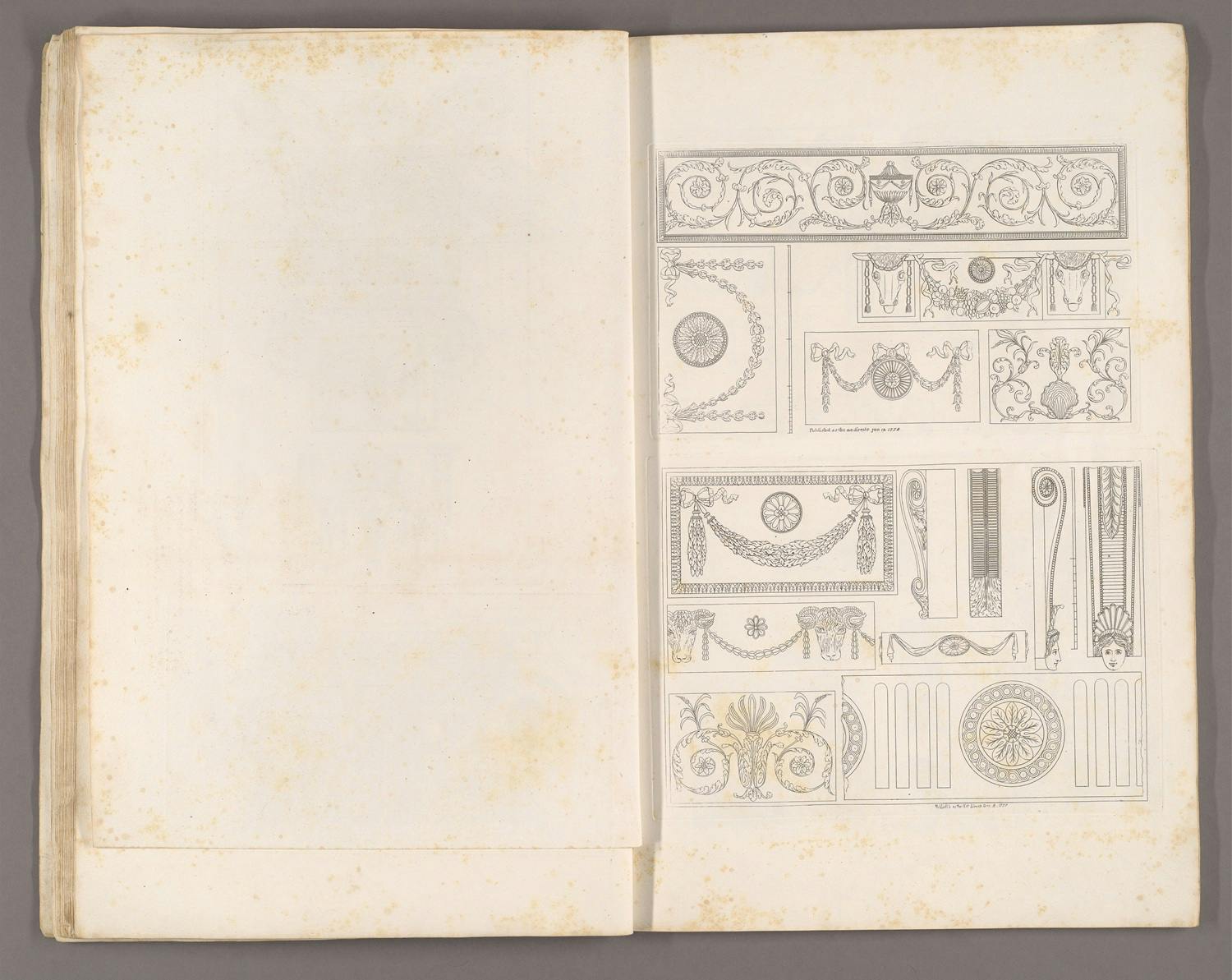
Image of a page in the Catalogue for Coade’s Artificial Stone Manufactory, London, c. 1784. Courtesy of the Yale Center for British Art, Paul Mellon Collection.
Coade stone
By the time Coade went into business, artificial stone had long been in development. Coade and her factory worked to refine what were probably inherited formulas to create a stone that was incredibly tough and of consistent high quality. Coade stone is ultimately made of ceramic materials, and the formulas used and developed were never patented.
Coade’s purchase of the factory and the success of her product coincided with and was directly impacted by the contemporary fashionable architectural style. Robert Adam (1728-1792) was the leading architect of the day, whose focus on neoclassical design created a demand for a material that was easy to work with to produce fine decorative details. Natural stone was impractical, but Coade’s artificial stone was perfect for the job, leading to a surge in its popularity.
Robert Adam and Bowood
Robert Adam worked extensively with William, 2nd Earl of Shelburne and later 1st Marquess of Lansdowne (1737-1805), at both Bowood and Lansdowne House in London during the 1760s.
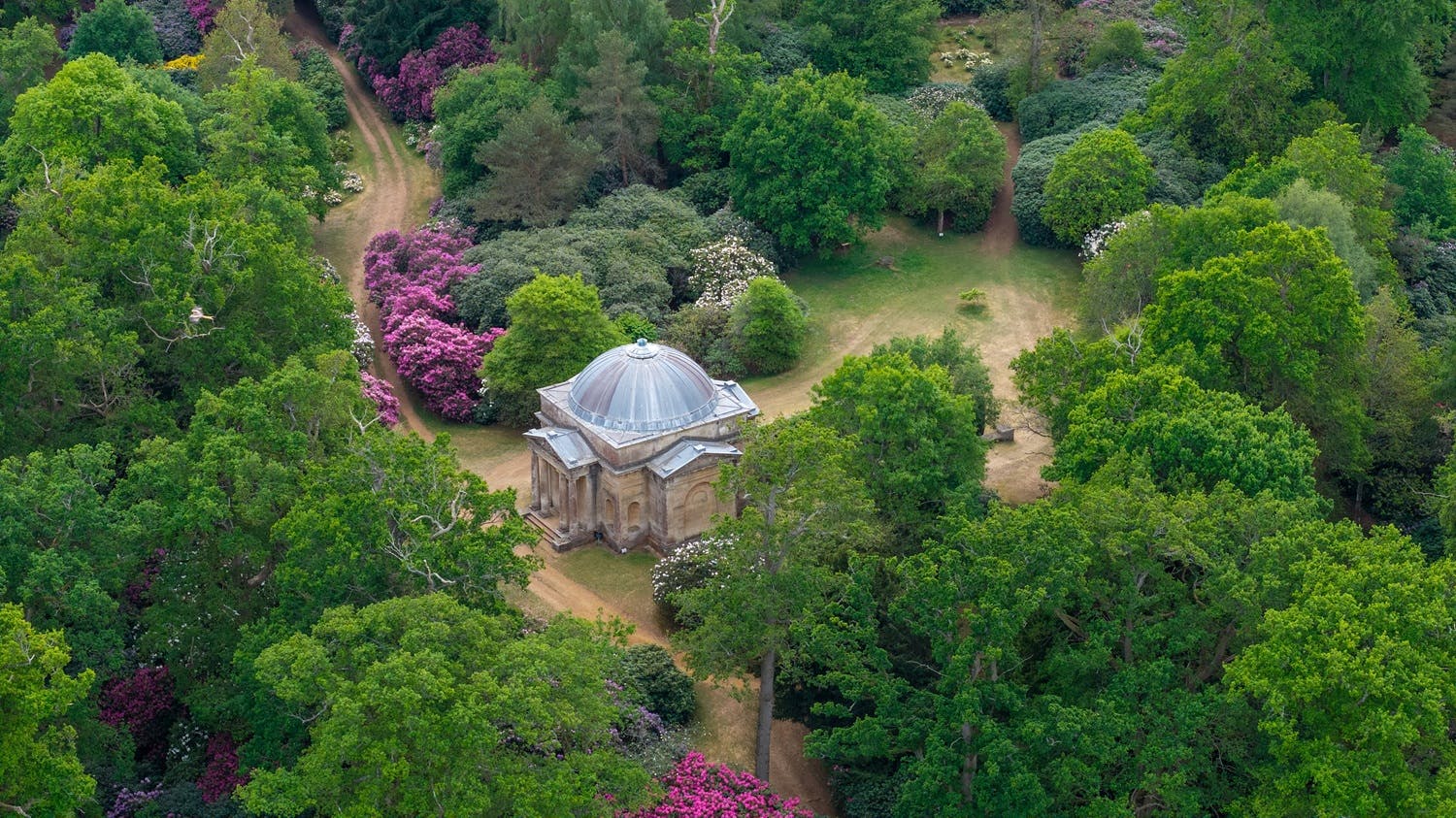
In 1762, Adam completed a Mausoleum for Bowood, in what is now the Woodland Garden. Mary, Dowager Countess of Shelburne (d. 1780) commissioned it as a memorial to her husband John, 1st Earl of Shelburne (1706-1761), and a resting place for the family. It is built as a Pantheon (a temple dedicated to the Gods in classical mythology, like the Pantheon in Rome) and as part of this, Adam completed a design for ornamental urns at some point between 1762 and 1765. This design was then made reality by Coade and bought by William, Lord Shelburne in the 1770s.
A new home and restoration
The urns spent many years adorning the Mausoleum before being moved to the entrance of Bowood House in the 1970s by Lord Lansdowne. In recent years, they were restored by Stephen Pettifer and the team at Coade, who have ensured the preservation of the beauty of these two sculptural pieces for many years to come. The urns are a testament not only to beautiful eighteenth-century design, but to a formidable female businesswoman.
The Coade stone urns can be enjoyed as you walk across the threshold of Bowood House. With the opening of the Woodland Garden on Friday 3rd April until Sunday 7th June, you can take a walk through the beautiful plantings and experience the peaceful serenity of the Mausoleum and the grounds.