Meet the object
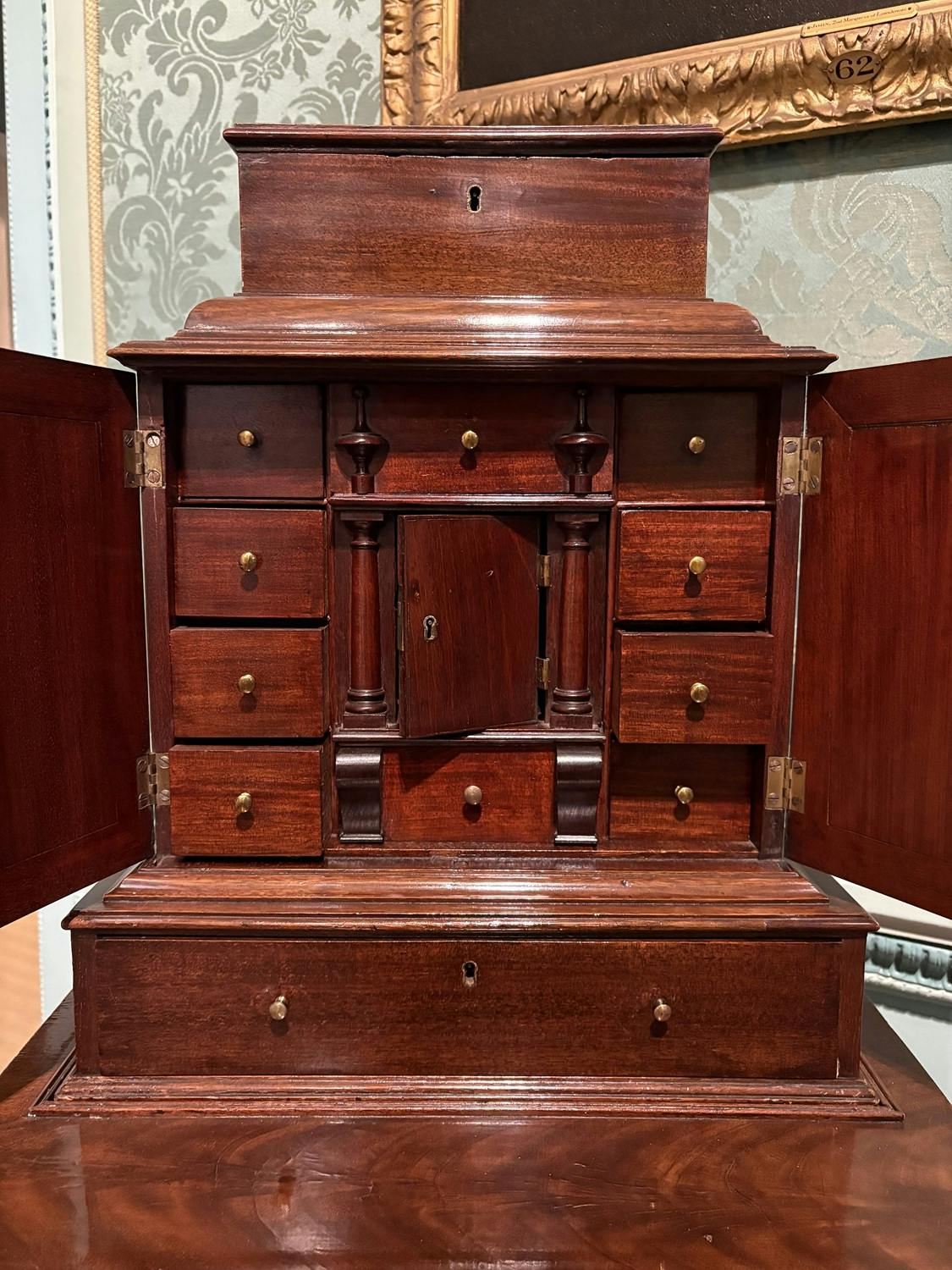
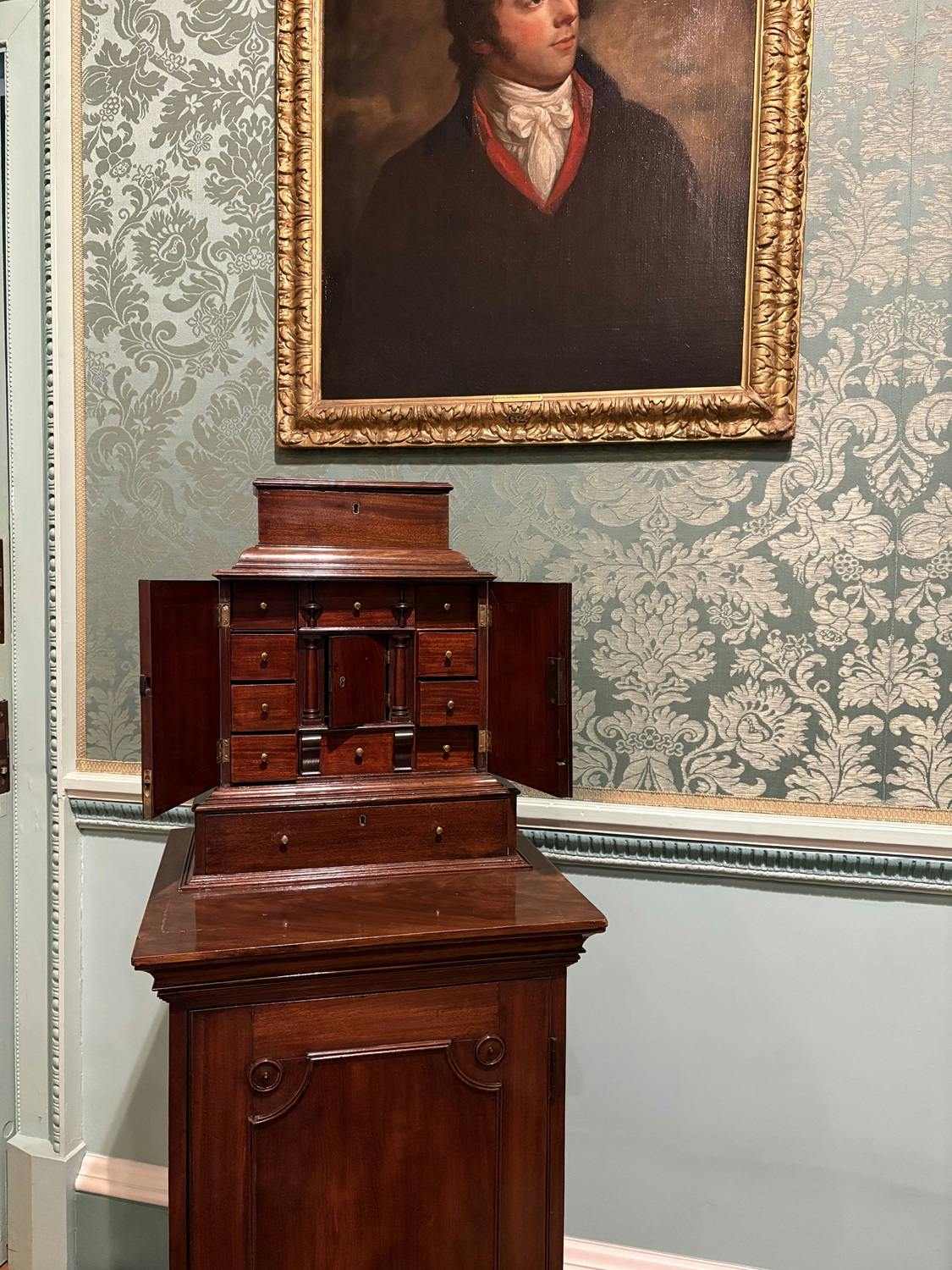
When the doors of this mahogany cabinet are opened, there is a surprise to be found. Inside, there are many compartments and drawers to categorise and keep treasures and specimens safe.
This cabinet may have been made by Thomas Chippendale (1718-1779), the most famous furniture maker and designer of the eighteenth century in Britain. He was incredibly versatile, working on many different types of furniture and for many illustrious clients, and his 1754 book The Gentleman and Cabinet-Maker’s Director established his influence across furniture design.
Dr. Johnson made a present of this cabinet to Queeney in c. 1772. She would have only been eight years old at the time, but was already somewhat famous amongst the circles of her family as an intellectual prodigy.
Hester, Queeney and Dr. Johnson
Queeney was the eldest daughter of Henry (1728-1781) and Hester Thrale (1741-1821). Henry Thrale was a politician and brewer, and Hester Thrale was an incredibly well-educated woman who established a salon at their home in Streatham Park in the 1760s. A salon was a private gathering in someone’s home, usually by invitation, where a group of people were brought together in conversation to discuss contemporary ideas, literature and culture.
At Streatham, Dr. Johnson was a key figure at the Thrale salon. Their friendship was such that, after Dr. Johnson’s death in 1784, Hester published a memoir of his life from the 1770s and 1780s, as well as an edition of his letters. She followed this with other books but became renowned for being a biographer of Johnson.
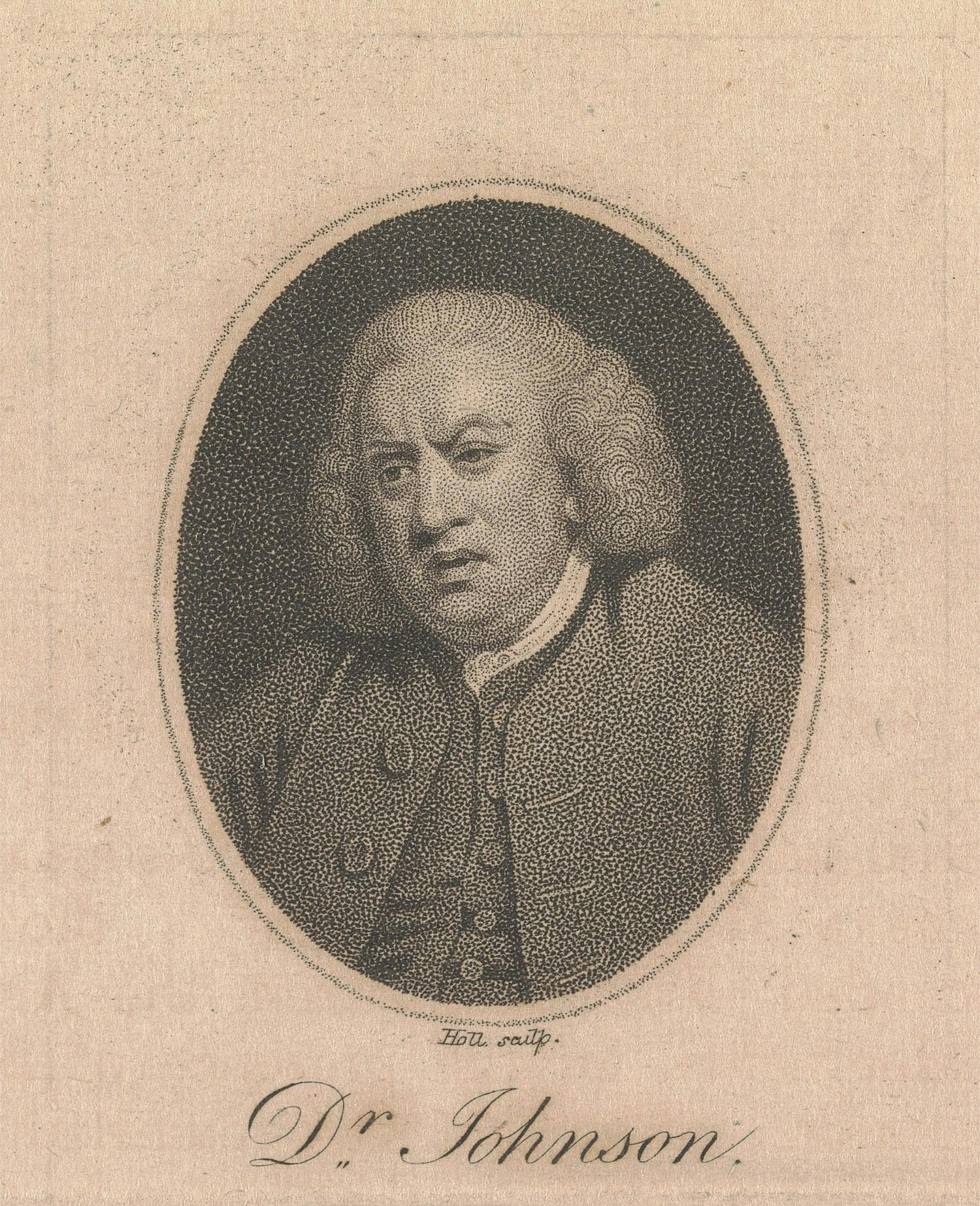
Image: William Holl II, Samuel Johnson. Courtesy of the Yale Center for British Art; Gift of Herman W. Liebert, B1995.9.115.
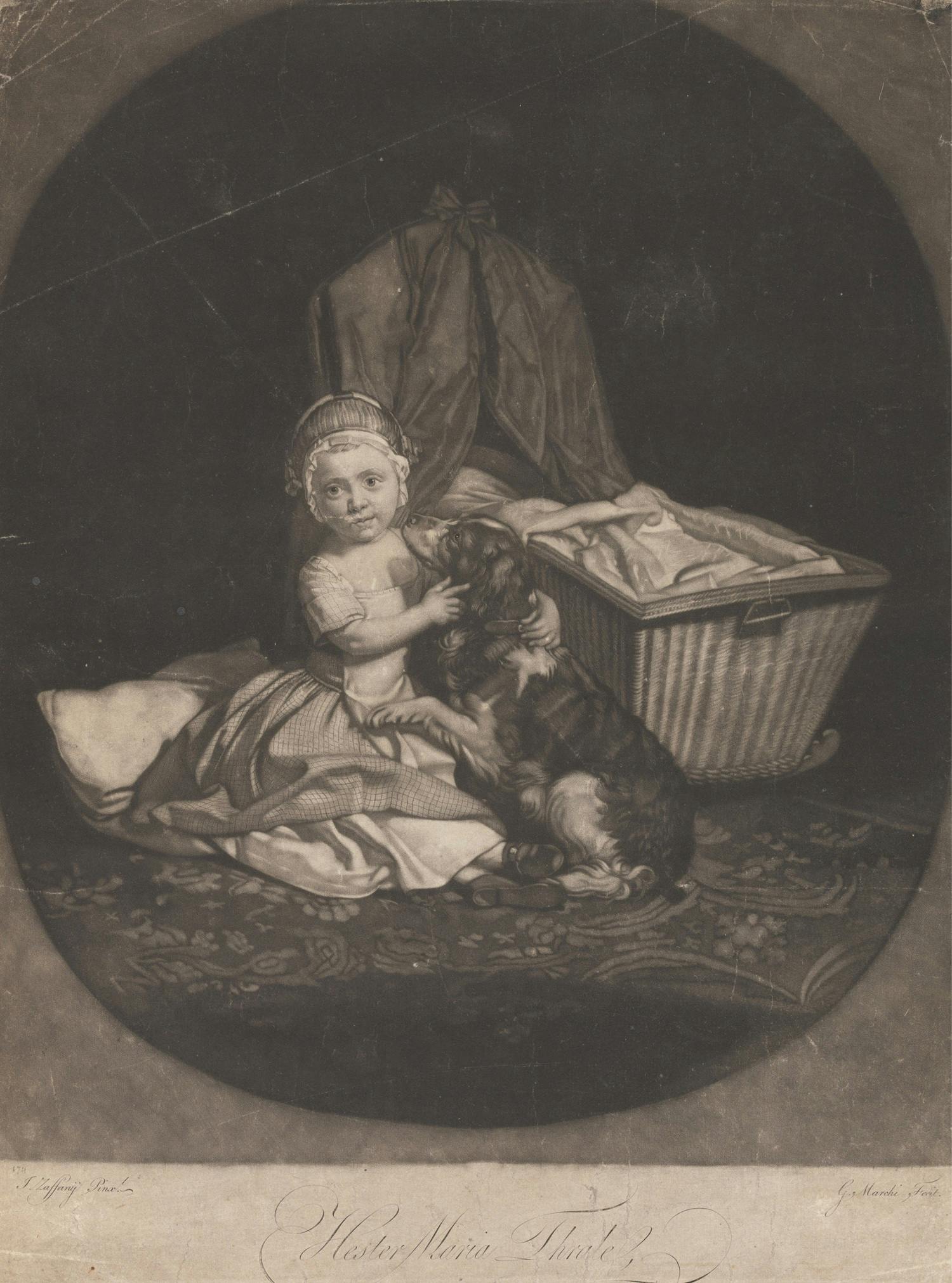
Right from Queeney’s arrival, Hester Thrale took an intense interest in her daughter’s education. She herself had been raised and educated by her mother and paternal aunt, encouraged to write and translate texts as early as being a teenager, and was recognised as an important female intellectual in the late eighteenth century. Thus, Queeney experienced intense tutoring from being an infant, interacting with the Streatham circle from a very early age. She developed a good relationship with Dr. Johnson, who taught her Latin and gave her the nickname Queeney. No more so is this relationship symbolised than in the gift of this cabinet, which tapped into the eighteenth-century fascination for collecting.
Image: Giuseppe Marchi, Hester Maria Thrale, c. 1766. Courtesy of the Yale Center for British Art, Paul Mellon Collection, B1974.12.662.
Curiosity and collecting
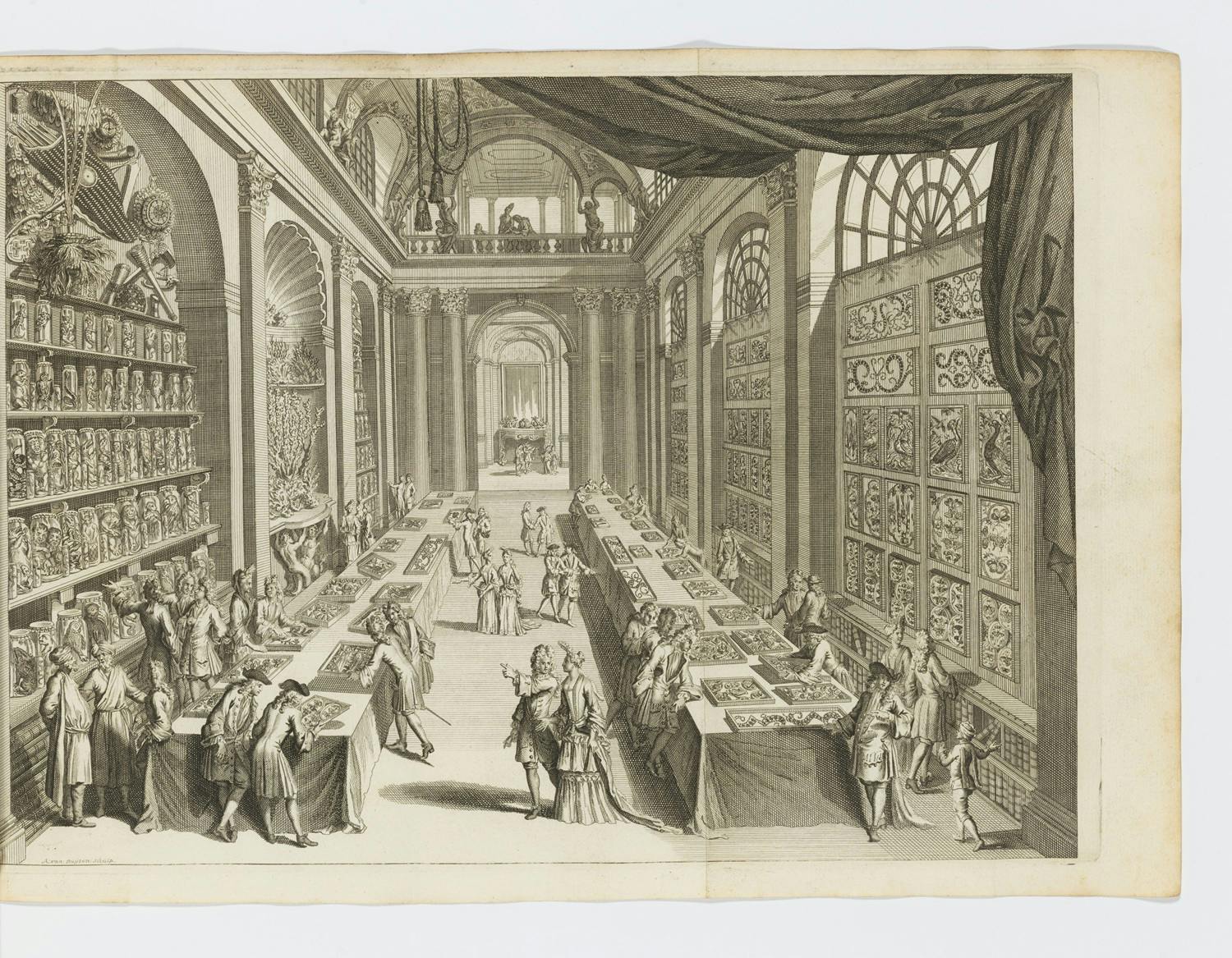
Cabinets like this were incredibly popular during this period. Though collecting objects to study them has a long history, this was really brought into practice during the Renaissance. Cabinets of curiosity would be filled with wondrous things, from fossils to art to bones, books to shells to ancient coins, all brought together by the collector to as a representation of the world around them.
During the seventeenth and eighteenth centuries, this practice became increasingly widespread, with more museums and private collections opening on a large scale, and with special cabinets built to have lots of spaces to safely keep and categorise items on a smaller scale. By having an object in front of you – a crystal from a far-off place, a coin from hundreds of years before, a piece of an ancient sculpture – the idea was that your knowledge could grow by physically interacting with subjects like history, geography and science. Cabinets and collections were also a great way to display knowledge and engage with others who had similar interests, a lot like the salon overseen by Hester Thrale.
Many women had collections: the Duchess of Portland (1715-1785) amassed a natural history collection so big that she employed two people to look after “The Portland Museum”. Not everybody collected to this extent, but cabinets like this were popular because many people engaged with the practice of collecting on various scales.
However, what is particularly special about this cabinet at Bowood is that it was gifted to a young girl. Queeney grew up in an environment that actively encouraged women to learn, and Dr. Johnson was incredibly supportive of female education. For him to give this to Queeney was a way to encourage her to be curious about the world around her from a very young age and to aid her learning, by storing, organising and using objects to understand the natural world.
Image: Levinus Vincent, Wondertooneel der Nature, 1706, 1715. Courtesy of the Metropolitan Museum of Art, 58.589.
Queeney and Bowood
In 1808, when Queeney was forty-four years old, she became the second wife of George Elphinstone, Admiral Lord Keith (1746-1823). Together they had one daughter, Georgina, and Queeney was stepmother to Admiral Keith’s daughter from his first marriage, Margaret. Margaret was the mother of Emily, the 4th Marchioness of Lansdowne, through whom many Keith objects came into the family.
Now, this beautiful cabinet can be found in the Georgian Room of the Exhibition Galleries. It is wonderful to be able to share this with our guests, highlight this practice of collecting, and how important it was to female education in the eighteenth century and beyond during this Women’s History Month.